Most commercial operators think about cleaning equipment in terms of pressure. More PSI, more GPM, more cleaning power. That framework works well for the majority of industrial cleaning applications, but it obscures an entire category of work where pressure is the wrong tool and steam is dramatically more effective.
Understanding where that line falls prevents both the frustration of equipment that underperforms and the expense of buying capability you will never actually use.
At PSI Products, we supply both pressure washing and steam cleaning equipment to commercial operators throughout Southern California, and the conversation we have most often is helping a buyer figure out which side of that line their work falls on.
The Fundamental Difference
A pressure washer cleans primarily through mechanical force. High-velocity water physically dislodges contamination from a surface. Volume and pressure are the operative variables, and water consumption is substantial, typically 3 to 8 gallons per minute in commercial equipment.
A commercial steam cleaner works on an entirely different principle. It delivers low-moisture, high-temperature vapor, typically dry steam at 250 to 350 degrees Fahrenheit, at low pressure and very low volume, often under a gallon per hour.
The cleaning mechanism is thermal and chemical rather than mechanical. Heat breaks down organic contamination, dissolves grease, and kills microorganisms without physical force being applied to the surface at all. That difference in mechanism drives every application decision between the two categories.
Where Steam Is Clearly Superior
Sanitization is the clearest case. Dry steam at surface temperatures above 200 degrees Fahrenheit kills bacteria, viruses, and mold on contact without chemical sanitizers. For food service equipment, healthcare environments, commercial kitchens, and any operation where pathogen control is a regulatory or liability concern, steam accomplishes what pressure alone cannot.
According to the Centers for Disease Control and Prevention, moist heat is among the most reliable methods of microbial inactivation available, which is the principle underlying steam’s effectiveness in these settings.
Water-sensitive environments are the second case. Steam’s very low moisture output means surfaces are nearly dry immediately after cleaning.
That matters enormously for interior work, including vehicle interiors, upholstery, equipment with exposed electrical components, indoor food preparation areas, and any environment where several gallons per minute of runoff creates a slip hazard, a drainage problem, or a stormwater compliance issue.
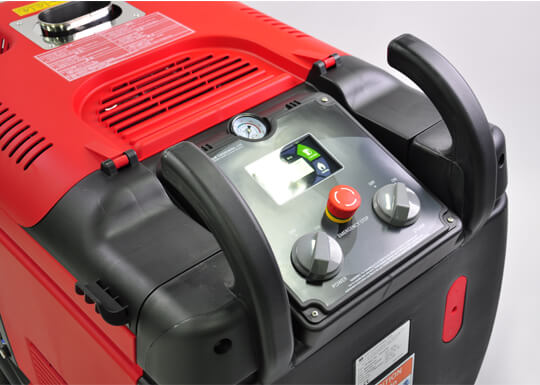
Detail and confined-space work is the third case. Steam delivered through small nozzles and brush attachments reaches into crevices, seams, and around components in ways a pressure washer’s spray pattern simply cannot without causing collateral damage to surrounding surfaces. Our commercial steamer line covers the range of configurations these applications call for, from compact units to continuous-fill industrial machines.
Delicate surfaces round out the list. Painted equipment, vinyl decals, gaskets, seals, and older or previously repaired surfaces that 3,000 PSI would damage are all cleaned safely with steam.
Where Pressure Remains the Right Tool
Large surface areas are pressure washing territory without qualification. Building exteriors, parking structures, fleet vehicle exteriors, and concrete flatwork would take an impractical amount of time to clean with steam. Water volume is what makes area coverage efficient, and no amount of thermal advantage compensates for covering a parking deck a few square feet at a time.
Heavy bulk contamination requires mechanical force to dislodge. Mud, caked soil, construction debris, and heavy mineral scale respond to impact, not to heat. Steam softens and dissolves. It does not blast.
Outdoor work at scale favors pressure equipment for the same throughput reasons, and our commercial pressure washer selection spans hot and cold water, gas and electric, and trailer-mounted configurations for operators who need mobility.
Where Hot Water Pressure Washers Fit
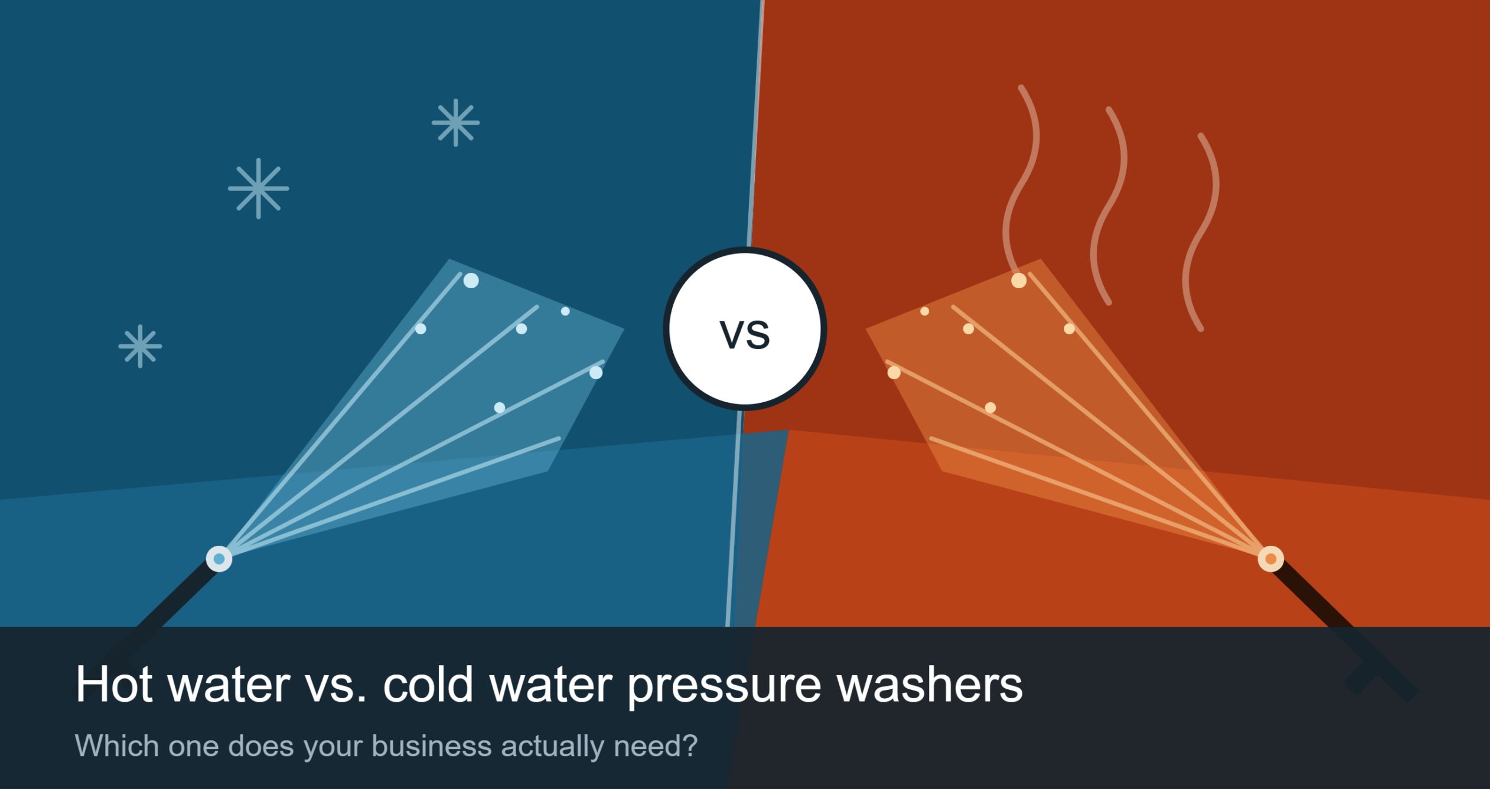
It is worth distinguishing steam cleaners from hot water pressure washers, because the two are frequently conflated in buying conversations. A hot water pressure washer delivers water at 180 to 210 degrees Fahrenheit at full pressure and full volume. It is a pressure washer with heat added, combining mechanical force with thermal cleaning benefit in a single machine.
For heavy grease removal across meaningful area, such as fleet degreasing, commercial kitchen exhaust hood cleaning, or industrial equipment, a hot water pressure washer is typically the correct answer rather than either a cold water unit or a steamer.
Operations That Genuinely Need Both
Many commercial operations benefit from having both categories available. A food processing facility might pressure wash floors, drains, and exterior areas while steam cleaning equipment, product contact surfaces, and confined areas.
A fleet operation might pressure wash exteriors and steam clean interiors and engine compartments. These are complementary tools rather than competing ones.
Making the Decision
Ask what the cleaning problem actually is before asking what the equipment specifications are. Bulk contamination over large areas means pressure. Sanitization, water-sensitive surfaces, detail work, or confined access means steam. Heavy grease over meaningful area means hot water pressure washing.
Contact PSI Products to discuss your application and get a recommendation matched to the actual work rather than to the highest available specification on the spec sheet.