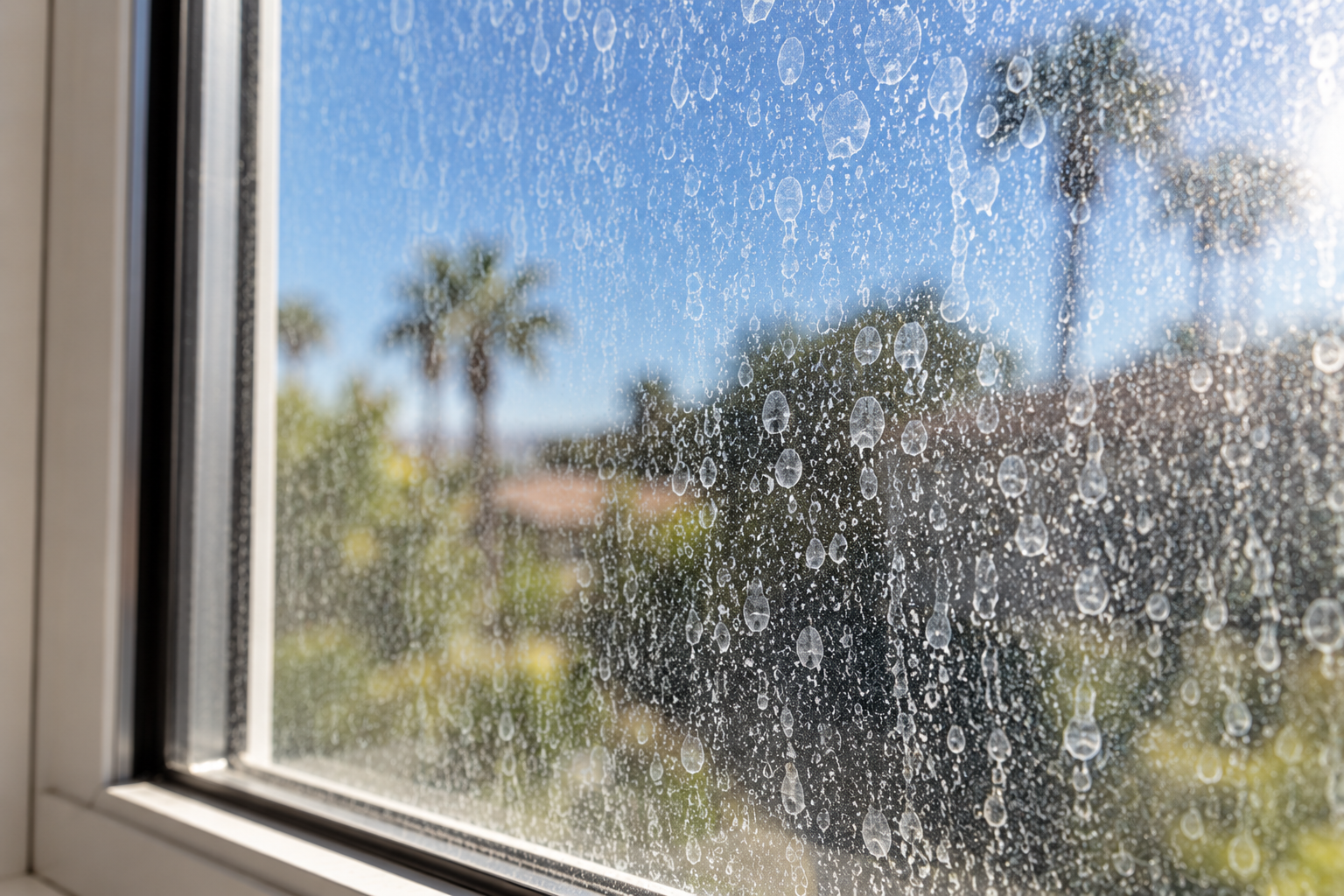
If you run a washing operation in Orange County, whether you clean fleet vehicles, wash windows, or rinse solar panels, you have almost certainly fought the same frustrating battle: everything you wash dries covered in spots. You rinse a surface until it looks perfectly clean and wet, and by the time it dries, a haze of cloudy white deposits has appeared.
The problem is not your technique or your soap. It is the water, and specifically the minerals dissolved in Orange County’s hard water. The solution is treating the rinse water, and the two main approaches, reverse osmosis and deionization, work differently and suit different operations.
At PSI Products, we supply water treatment and washing equipment across Southern California, and here is how to choose between RO and DI for spot-free rinsing.
Why Everything Dries With Spots
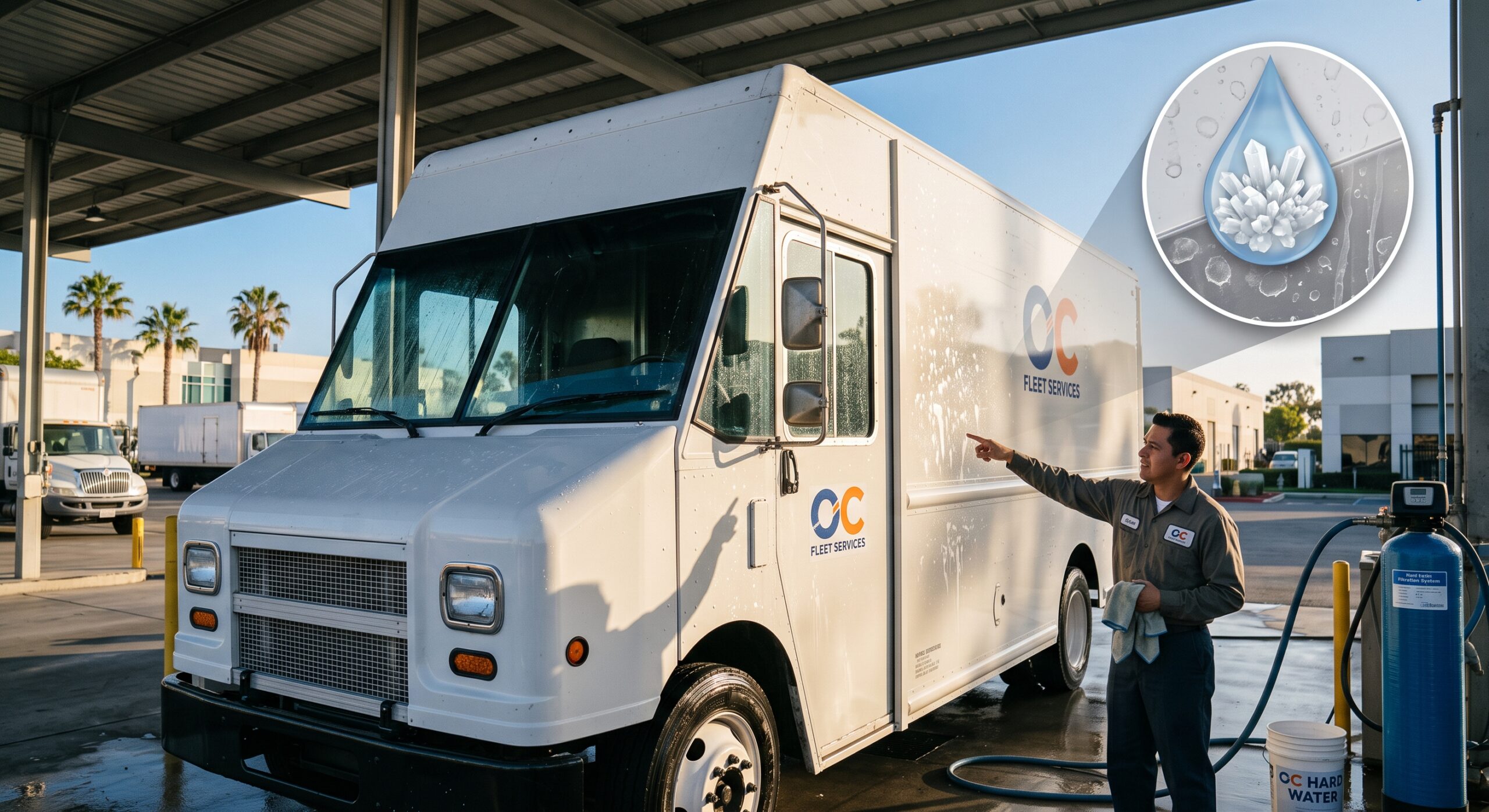
Water spots are dissolved minerals left behind when water evaporates. Orange County water is hard, meaning it carries a significant load of dissolved calcium, magnesium, and other minerals. When you rinse a surface and the water dries, the water itself disappears, but the minerals it carried do not; they precipitate out and bond to the surface as visible spots.
According to the U.S. Geological Survey, water hardness reflects the concentration of dissolved calcium and magnesium, and much of the American Southwest, including Southern California, sits in the hard to very hard range because of the mineral-rich geology the water moves through.
That is why the same spotting problem shows up whether you are rinsing a truck, a pane of glass, or a solar panel: the mineral-laden water dries and leaves its cargo behind on every surface.
The Fix Is Removing the Minerals Before You Rinse
Because the spots come from minerals in the water, the effective solution is treating the water to remove those minerals before it ever touches the surface. Rinse with water that carries no dissolved minerals, and there is nothing left behind when it dries, so the surface dries clear with no spots and no toweling required.
This is the principle behind spot-free rinsing, and it is achieved through two main technologies: reverse osmosis and deionization.
Both produce mineral-free or near-mineral-free water, but they do it differently, and the right choice depends on your water, your volume, and your application.
How Reverse Osmosis Works
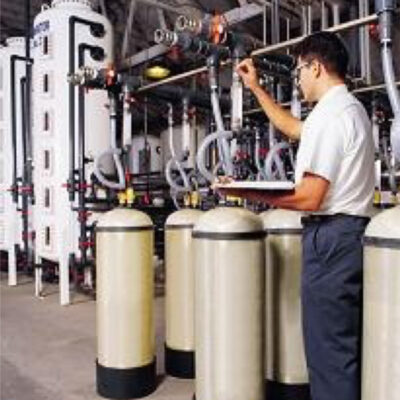
Reverse osmosis, or RO, forces water through a semipermeable membrane that blocks dissolved minerals and other contaminants, producing purified water on the other side. RO removes the large majority of dissolved solids, and for many washing applications the water it produces is pure enough to dry spot-free on its own.
RO systems have a per-gallon operating cost that is relatively low once the system is in place, which makes them economical for operations that use a lot of water. The trade-offs are that RO systems produce some wastewater in the purification process, they work more slowly than simply drawing from the tap, and they typically require a storage tank to hold purified water so it is ready when you need it.
For higher-volume operations, RO paired with the right pressure washing equipment is often the most cost-effective path to spot-free water.
How Deionization Works
Deionization, or DI, passes water through resin beds that exchange the dissolved mineral ions for ions that do not cause spotting, producing extremely pure water. DI can produce water of even higher purity than RO alone, which matters for the most demanding spot-free applications.
DI systems are simpler and more compact than RO systems and produce purified water immediately without a storage tank, which makes them convenient and highly portable, well suited to mobile operations.
The tradeoff is operating cost: the DI resin becomes exhausted as it removes minerals and must be replaced or regenerated, and the harder the water, the faster it exhausts. In an area with water as hard as Orange County’s, DI resin used on its own can exhaust quickly and become expensive.
Matching the Technology to Your Operation
The practical decision often comes down to volume and water hardness. High-volume operations, such as fleet washing that uses large quantities of water daily, frequently favor RO because its low per-gallon cost offsets the higher upfront investment.
Mobile and lower-volume operations, such as window cleaning, often favor DI for its portability and simplicity. And many operations in hard-water areas use the two together: RO removes the bulk of the minerals economically, and a DI polishing stage takes the water the rest of the way to the highest purity, while dramatically extending the life of the DI resin because it only has to remove what the RO left behind.
For fleet, window, and solar panel rinsing in Orange County specifically, an RO system with DI polishing is a common and effective configuration.
Protecting Equipment and Results Together
Treating your rinse water does more than eliminate spots. The same minerals that spot your surfaces also build scale inside washing equipment, shortening its life and reducing efficiency, so water treatment protects your equipment investment while it improves your results.
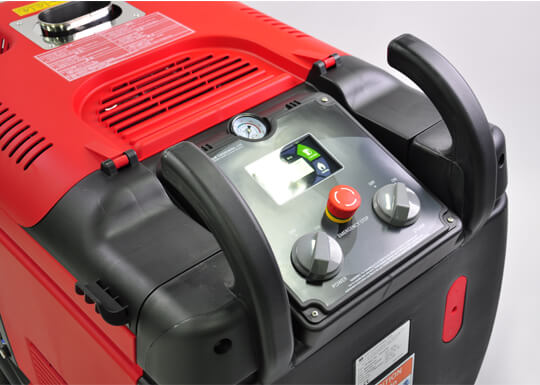
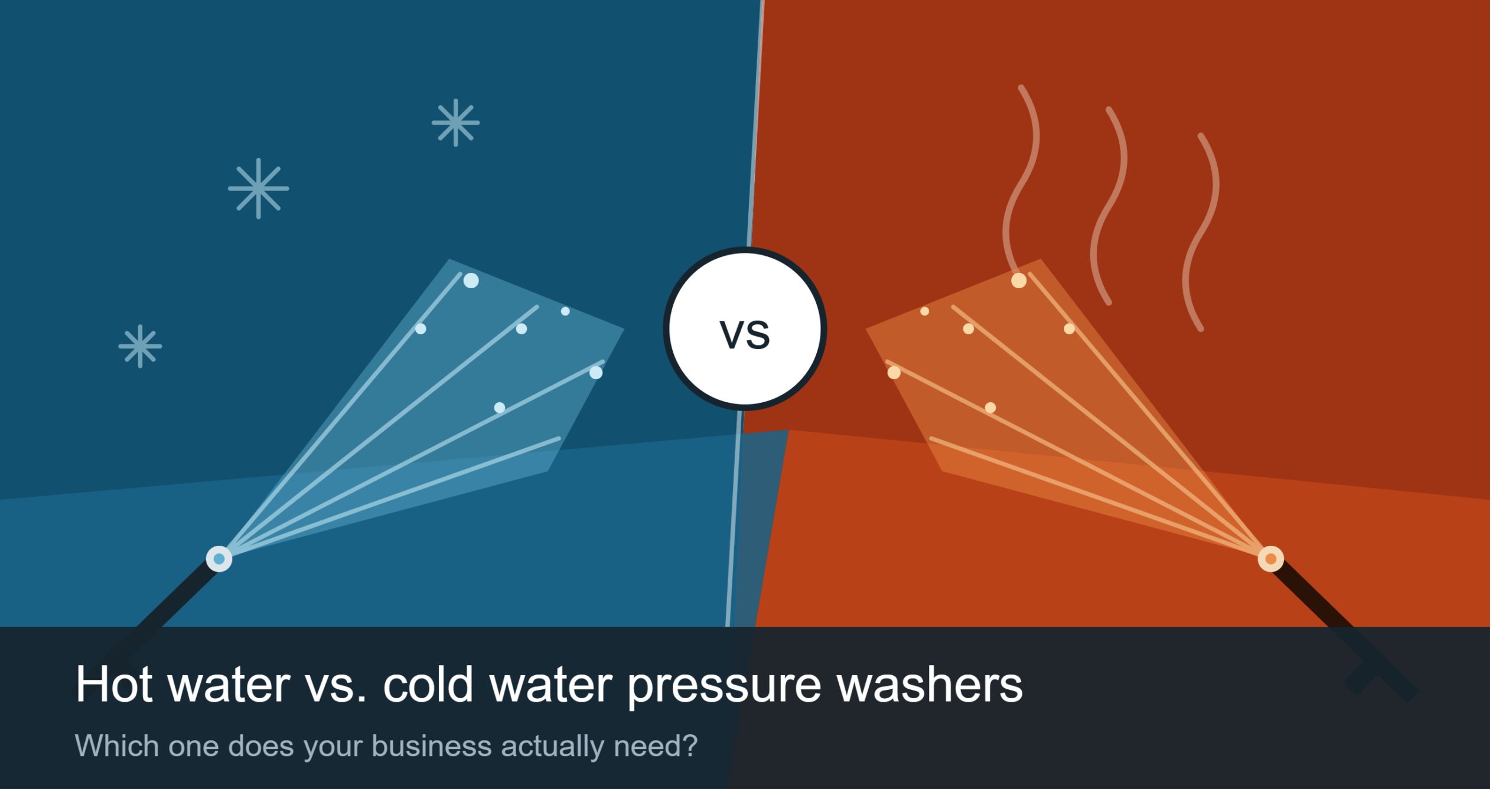
Whether your work calls for pressure washing or commercial steam cleaning equipment, the right water treatment pairs with it for a complete spot-free solution matched to your operation.
Stop Rewashing the Same Surfaces
If everything you wash in Orange County keeps drying with spots, you are not doing anything wrong, and no amount of technique will beat the water.
Treating the rinse water is the fix, and choosing the right approach between RO, DI, or a combination gets you spot-free results and protects your equipment at the same time.
Contact PSI Products to evaluate your water and find the spot-free rinsing system that fits your operation.