Spring is when commercial fleet operators throughout Southern California take stock of their equipment and address the maintenance that accumulated and got deferred through the slower winter months.
For businesses whose operations depend on trucks, vans, trailers, and heavy equipment, fleet appearance is not simply an aesthetic consideration. It directly affects professional image, client perception, and in regulated industries, operational compliance.
Pressure washing is the most efficient method for getting a fleet clean and keeping it that way, but the right pressure washer for one type of operation is definitively the wrong choice for another.
Understanding the key specifications before you purchase or lease equipment saves money, prevents equipment frustration, and ensures your results actually match your operational requirements.
At PSI Products, we supply commercial and industrial pressure washing equipment to fleet operators, contractors, and facilities managers throughout Southern California.
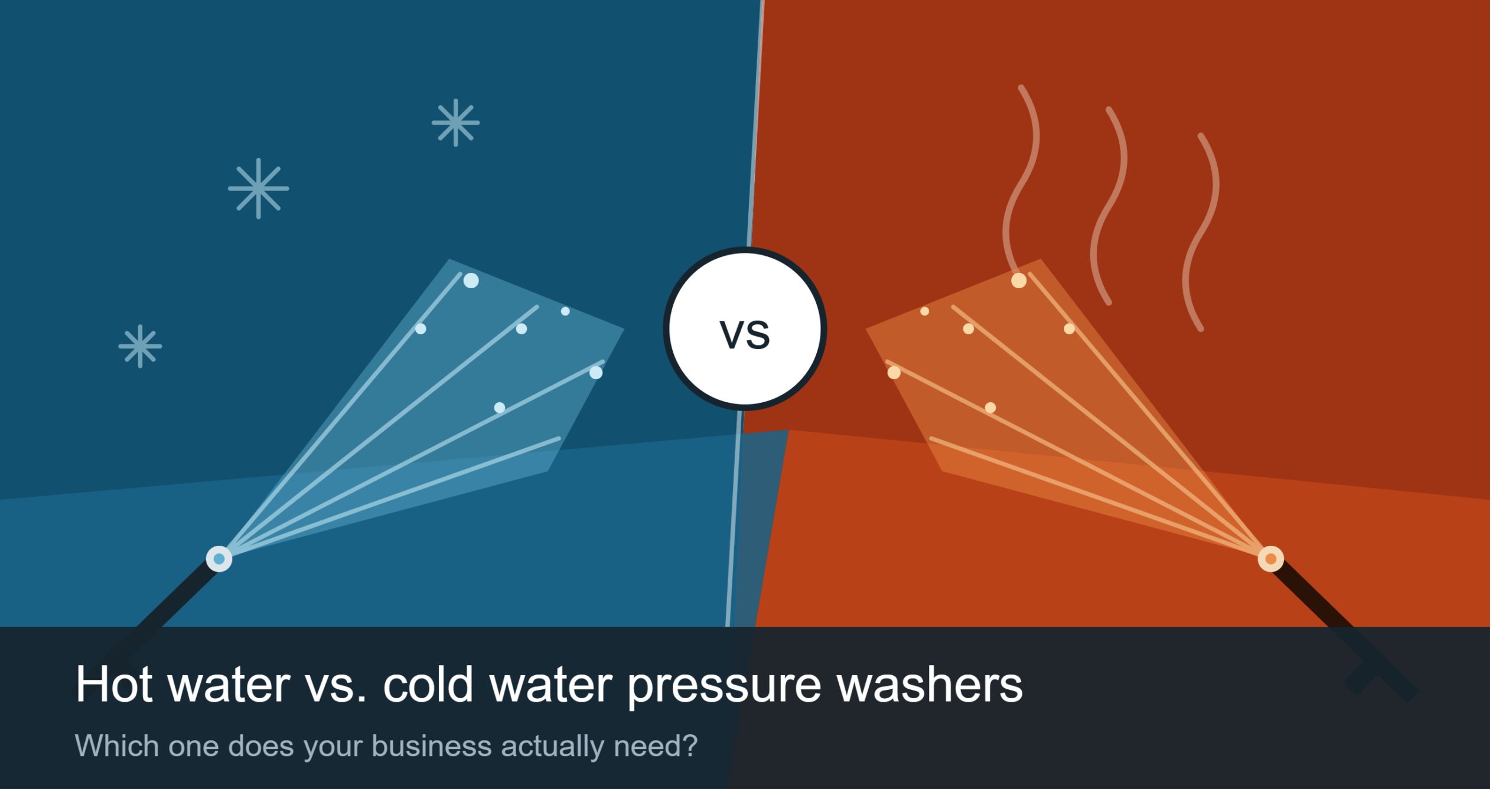
Hot Water vs. Cold Water: The Decision That Matters Most
The single most consequential specification decision when selecting a commercial pressure washer is whether your operation requires hot water capability.
For the majority of fleet washing applications that involve engine oil contamination, chassis grease, road grime from diesel exhaust, or food processing byproducts, hot water is not simply a beneficial upgrade. It is substantially more effective in a way that makes cold water an inadequate substitute.
Hot water pressure washers incorporate a burner system that heats water to operating temperatures between 180 and 210 degrees Fahrenheit, and that temperature increase dramatically accelerates the chemical breakdown and physical removal of petroleum-based contamination and biological material from vehicle surfaces.
Cold water machines move water volume and pressure effectively and are well-suited for removing dirt, mud, pollen, and loose debris from vehicle surfaces that carry no significant oil or grease contamination. If your fleet consists primarily of passenger vehicles, cargo vans carrying dry goods, or trailers that do not accumulate petroleum contamination, a quality cold water unit may serve your needs entirely adequately.
If your equipment is regularly exposed to engine oil, hydraulic fluid, diesel exhaust deposits, or food processing residue, cold water washing will not clean effectively without excessive chemical application and manual scrubbing time that defeats the efficiency purpose of pressure washing altogether.
Pressure and Flow Rate: Getting the Specifications Right
Pressure measured in pounds per square inch and flow rate measured in gallons per minute are the two primary performance specifications of any pressure washer, and the instinct to maximize both is understandable but frequently counterproductive.
For most commercial fleet washing applications, a working range of 2,000 to 4,000 PSI combined with a flow rate of 3 to 5 GPM covers the overwhelming majority of requirements effectively. Exceeding the appropriate pressure threshold can damage vehicle paint finishes, degrade decals and graphics, force water into electrical connections, and compromise door and window seals.
Higher flow rates increase throughput and reduce washing time for large surface areas, but they also require proportionally greater water supply infrastructure and generate more wastewater that must be managed.
According to the Pressure Washer Manufacturers Association, matching pressure and flow rate specifications to the actual surface characteristics and contamination type of your application produces better results than simply selecting the highest available specifications. The right combination is determined by what you are washing, not by what is available.
Gas vs. Electric: Matching Power Source to Your Operating Environment
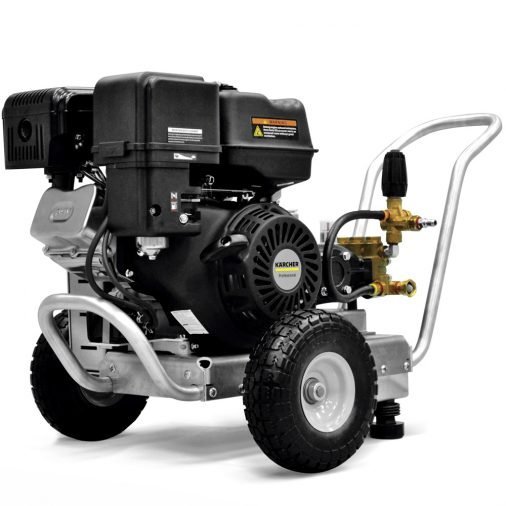
Gas-powered pressure washers provide true portability and high-output performance in environments without reliable electrical infrastructure, like field job sites, remote facility locations, and outdoor washing areas without conveniently accessible power outlets.
They handle intermittent heavy-duty use cycles effectively and deliver more raw power than most electric units available at comparable investment levels.
Electric pressure washers are substantially quieter during operation, produce no combustion exhaust, require less routine maintenance, and are meaningfully better suited for enclosed or partially enclosed washing environments where combustion exhaust accumulation creates operator health and air quality compliance concerns.
For fleet washing conducted inside a shop bay, covered vehicle maintenance area, or any partially enclosed facility, an electric unit with appropriate amperage supply is frequently the operationally superior choice.
Environmental Compliance Cannot Be Overlooked in California
Commercial fleet washing operations in California that allow wash water contaminated with petroleum, detergents, or other pollutants to reach storm drain systems can face substantial regulatory fines under state and local stormwater regulations.
Proper wash water containment and recovery equipment is a compliance requirement, not an optional upgrade.
PSI Products carries a complete line of commercial pressure washers including hot and cold water configurations, gas and electric power sources, trailer-mounted systems for mobile operations, and wash water containment solutions. Spring is the optimal time to evaluate and upgrade aging pressure washing equipment before peak season activity makes scheduling service and equipment delivery more difficult.
Contact PSI Products today to discuss your specific fleet washing requirements and receive the right equipment recommendation for your operation.